






News & Blog
The Future of Industrial Packaging: Key Trends Shaping the Industry
Industrial packaging is evolving from a purely functional component into a strategic part of modern supply chains. As industries such as chemicals, food, and pharmaceuticals become more regulated and efficiency-driven, expectations for packaging solutions continue to increase.
In our experience working with global customers across different applications, several clear trends are emerging. These trends are not isolated—they are reshaping how industrial packaging is designed, manufactured, and managed over its lifecycle.
1. Sustainability Is Becoming a Core Requirement
Sustainability has moved from a secondary consideration to a central requirement in industrial packaging decisions.
Regulatory pressure, combined with corporate ESG commitments, is driving demand for solutions that reduce environmental impact while maintaining operational performance.
Reusable systems such as IBC containers are increasingly preferred due to their durability and lower lifecycle cost. At the same time, more companies are exploring structured approaches to collection, reuse, and recycling, particularly in regions with established environmental frameworks.
This shift is gradually changing how packaging is evaluated—not only at the point of purchase, but across its entire lifecycle.
2. Automation Is Defining Manufacturing Consistency
Manufacturing capability is becoming a key differentiator in the industry.
Automation is no longer simply a way to improve efficiency; it is essential for ensuring consistency, repeatability, and quality control. Automated processes in blow molding, metal fabrication, and assembly significantly reduce variability and improve product reliability.
From our perspective, investments in automated production systems are critical not only for scaling capacity, but also for maintaining stable quality across large volumes. As customers place greater emphasis on consistency, this will continue to be a defining factor in supplier selection.
3. Material Performance Requirements Are Increasing
As industrial applications become more complex, so do the requirements placed on packaging materials.
There is growing demand for:
- Enhanced chemical resistance
- Improved barrier performance
- Anti-static properties for hazardous environments
- Stability under varying temperature conditions
Multi-layer structures and specialized material formulations are being adopted in applications where standard configurations are no longer sufficient.
At the same time, the quality and consistency of base materials—such as high-grade HDPE—remain fundamental to long-term performance. Material selection continues to play a critical role in ensuring safety, durability, and compliance.
4. Safety and Compliance Expectations Are Rising
With the expansion of global trade, compliance requirements are becoming more stringent and more closely monitored.
Customers are increasingly focused on documented performance and validation, including:
- UN certification for dangerous goods
- Drop, vibration, and pressure testing
- Temperature resistance and long-term stability
Beyond meeting minimum standards, there is a growing expectation for transparency in testing and quality control processes.
In practice, this means that reliable packaging solutions are defined not only by design, but also by the systems used to validate and maintain their performance.
5. Demand for Application-Specific Solutions
Industrial packaging is becoming more application-driven.
Different sectors have distinct requirements:
- Chemical industries prioritize safety and compatibility
- Food and pharmaceutical sectors emphasize hygiene and compliance
- Agricultural and specialty chemical applications require formulation-specific solutions
As a result, standardized products are increasingly supplemented by customized configurations. Adjustments in valve types, pallet structures, and material specifications are becoming more common as customers seek solutions tailored to their operational needs.
6. Transition Toward Circular Packaging Systems
The concept of circularity is gaining traction in industrial packaging.
Rather than focusing solely on initial use, companies are placing greater emphasis on extending product lifecycle through reuse, refurbishment, and recycling.
For IBC systems, this transition is particularly relevant due to their structural durability. Establishing effective collection and recycling networks—often at a regional level—is becoming an important part of the overall packaging strategy.
While implementation varies by market, the direction is clear: lifecycle management will play an increasingly important role in how packaging solutions are evaluated.
The industrial packaging sector is undergoing a steady but meaningful transformation. Sustainability, automation, material performance, compliance, and lifecycle management are all contributing to a more complex and demanding environment.
For manufacturers, this means focusing not only on product design, but also on production capability, quality systems, and long-term reliability.
At Jiangsu Jieyuan Container Co., Ltd., we continue to invest in these areas to support our customers across a wide range of industries and applications.As the industry evolves, the fundamentals remain unchanged: packaging must be safe, consistent, and dependable. The difference lies in how these standards are achieved and maintained in an increasingly demanding global market

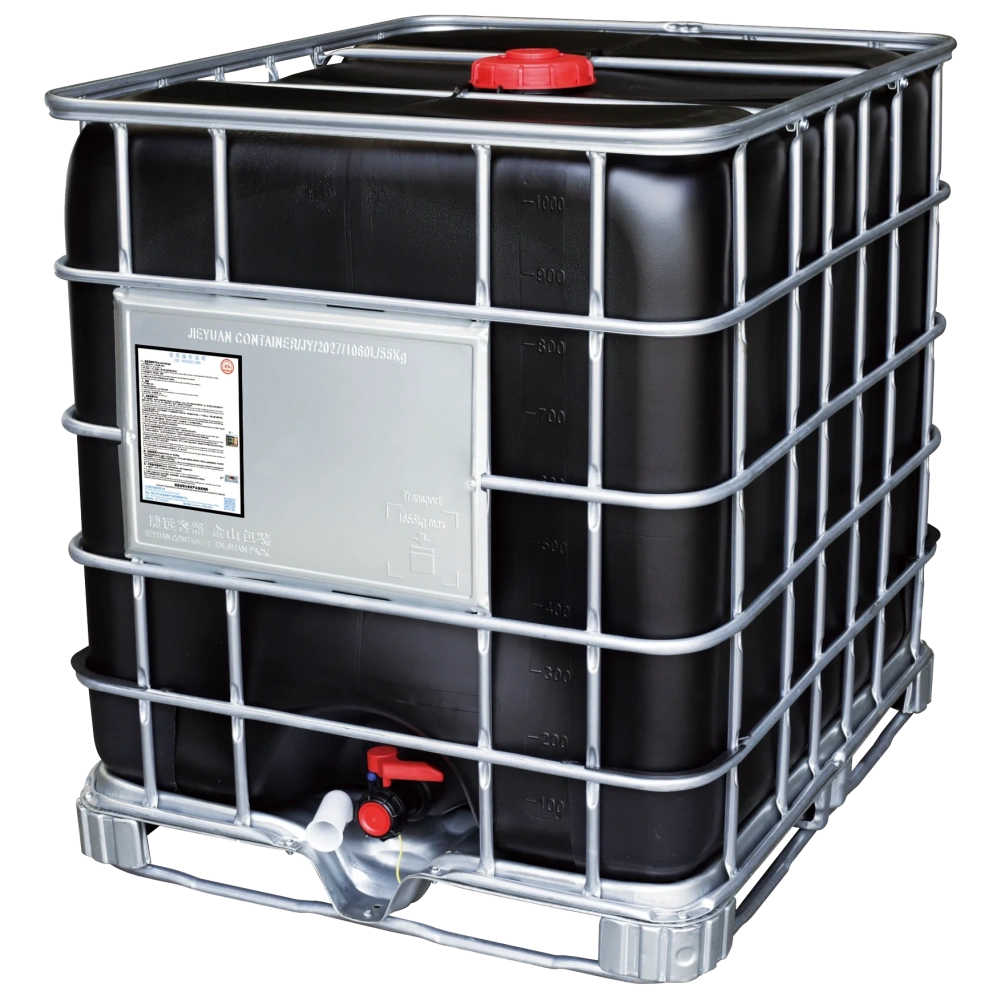
Professional IBC Solutions
UN-Certified, Food-Grade Compliant, Patent-Backed Safe Storage & Transport.